
Signage Integration With Awnings That Works
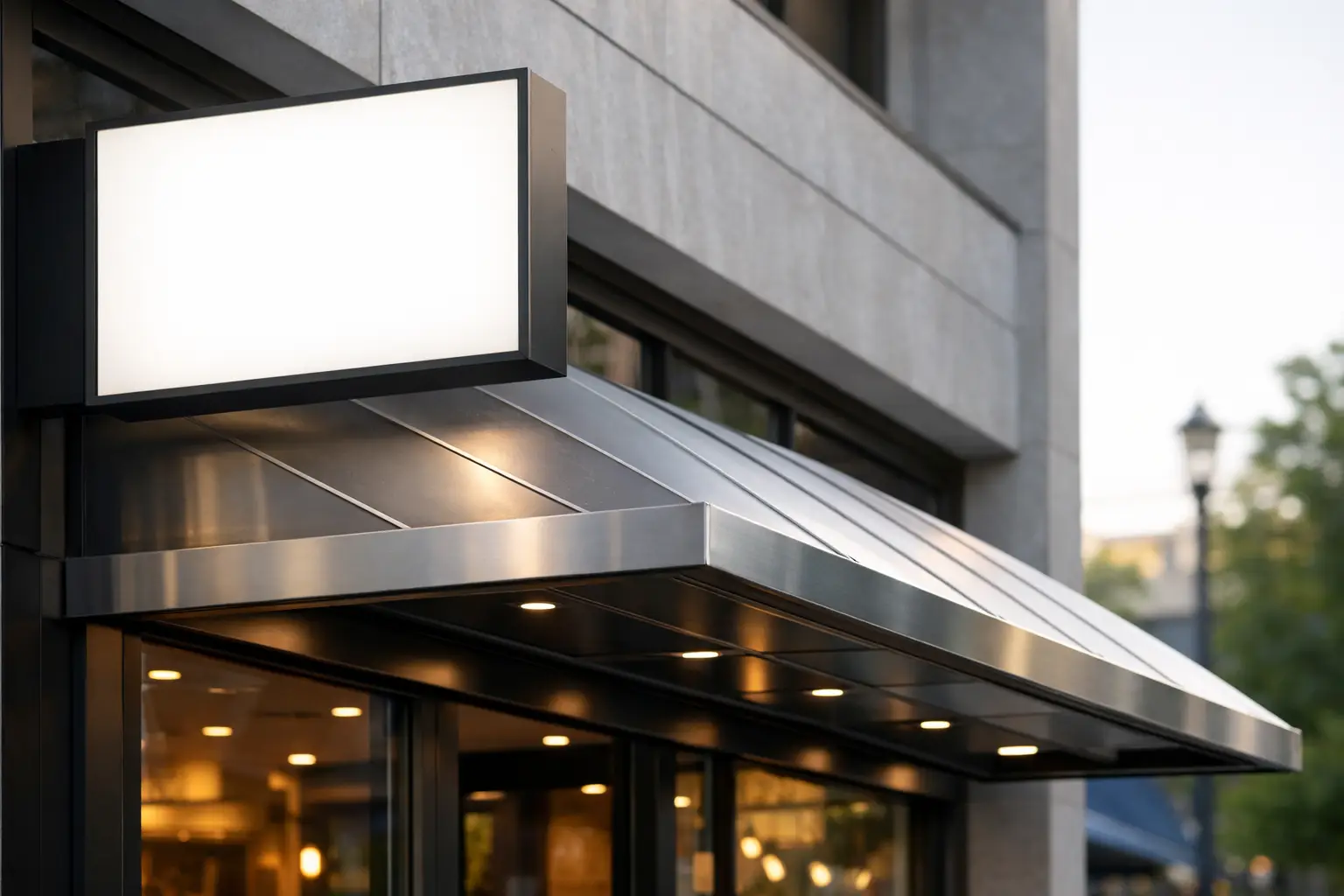
A customer standing across the road has only a few seconds to find your business, read the name and understand what is behind the shopfront. Signage integration with awnings can make that job easier, but only when the sign, frame, lighting and awning structure are planned as one piece of work. A good result looks purposeful, protects the entry and holds up to weather and daily use. A poor result can leave a heavy sign fixed to a canopy that was never designed to carry it.
For landlords, retailers and hospitality operators, the practical question is not simply where a logo should go. It is whether the existing awning can safely support the proposed sign, whether the sign will remain visible from the street, and whether the work meets building, electrical and local approval requirements.
Start With the Awning, Not the Sign
Most signage problems begin when the sign supplier and awning contractor work separately. The sign is designed first, then someone is asked to attach it to an existing fascia, fabric skin or steel frame. That can create unnecessary holes, weak fixings, water entry points and a finish that looks added on rather than properly built.
The better approach is to inspect the awning before finalising the sign. Its construction determines what is possible. A steel-framed shopfront awning may accommodate fascia lettering, a lightbox or an under-awning blade sign if the supporting members and connections are suitable. A fabric awning may be better suited to printed valance graphics or carefully applied branding, rather than a heavy illuminated sign.
Existing condition matters as much as design. Rusted steel, loose cladding, water damage, old electrical cabling and deteriorated fixings should be dealt with first. There is little value in installing quality signage over an awning that needs repair or replacement within the next year.
Choose a Sign Type That Suits the Street Front
The right sign depends on the business, the viewing distance and the available awning structure. A narrow retail frontage on a busy footpath needs a different solution from a corner café or a large commercial tenancy on a main road.
Fascia signage is often the cleanest option for shopfront awnings. Individual letters, panels or a fabricated sign face can sit on the front edge of the canopy and give passing traffic a clear read. It works particularly well where the awning has a deep, straight fascia and the business name needs to be visible from across the street.
Under-awning signs are useful where pedestrians are the main audience. A projecting blade sign mounted beneath the canopy can be read as people walk along the footpath, even when the main fascia is obscured by parked vehicles or neighbouring awnings. Its size, height and projection need careful consideration so it does not interfere with public access or create a head-clearance issue.
Printed graphics can be a cost-effective option for fabric awnings and valances. They provide strong branding without adding significant weight, although fabric printing has limits. Fine details can be hard to read from a distance, and the material will eventually need cleaning, repair or replacement due to weather exposure.
Illuminated signage is valuable for venues trading early, late or after dark. It also brings extra work: cable routes, electrical isolation, weather protection, access for maintenance and appropriate installation by a licensed electrician. Lighting should improve legibility, not create glare for customers, neighbours or drivers.
Design Signage Integration With Awnings for Visibility
A sign can be perfectly manufactured and still fail if it is too small, poorly positioned or crowded with information. The first job is making the business easy to identify. That usually means a clear name, a simple logo and enough contrast between the lettering and the awning background.
Avoid treating every available surface as advertising space. Phone numbers, social handles, menus, product lists and promotional messages can all be useful, but they should not compete with the main business name. From a street-facing position, a person should understand the sign before they need to stop and study it.
Colour selection is not just a branding decision. Dark lettering on a dark fascia, or pale lettering against a sun-faded awning, loses impact quickly. Strong contrast generally performs better, especially on Sydney streets where harsh daylight, shade from buildings and night lighting can change the way a shopfront reads throughout the day.
Scale is equally important. On a wide awning, undersized lettering can look lost. On a small frontage, oversized graphics may feel cramped and make the business look less professional. A measured site check, photos taken from key viewing points and a simple visual layout before fabrication can prevent expensive changes later.
Protect the Structure and Keep Water Out
Every penetration through awning cladding or roofing needs to be considered. Sign fixings can compromise the weatherproofing if they are drilled without suitable sealing, flashings or backing support. Water entering behind a sign panel may not be obvious at first, but over time it can lead to corrosion, staining, damaged linings and repair costs.
The weight and wind load of the sign also need attention. A lightweight set of letters is very different from a large lightbox or projecting blade sign. Wind places force on the sign, its brackets and the awning frame, particularly on exposed corners and upper-level frontages. The fixing method must suit the actual substrate, not assumptions about what sits behind the cladding.
Where structural changes are required, engineering input may be needed. This is particularly relevant for new awnings, replacement canopies, major alterations or heavier signage installations. Engineer's certification support gives property owners and project managers a clearer path when documentation is required and helps ensure the finished work is built for its intended load.
Plan Access, Compliance and Site Safety Early
Commercial shopfront work happens in public-facing areas. Installation crews may be working above customers, staff, parked cars and a busy footpath. That affects how the job should be staged, how the work zone is controlled and when installation can take place.
Before work starts, confirm relevant building and council requirements for the property and proposed signage. Rules can vary by location, heritage considerations, sign type, illumination and whether the installation projects over public land. A landlord's approval may also be required under the lease. Checking these points early is far easier than modifying a completed sign after a compliance issue is raised.
Access equipment, pedestrian management and safe isolation of electrical services should be allowed for in the quote and programme. If an old awning or sign needs removal, demolition must be managed properly. Uncontrolled removal creates risks to workers and the public, especially where ageing steel, glass, electrical components or loose cladding are involved.
Coordinate the Trades Before Fabrication
The best results come from coordination between the awning contractor, sign manufacturer, electrician, builder and property representative. It does not need to be complicated, but each party needs to know where supports, cables, drainage paths and access points will sit.
A practical pre-start discussion should confirm the finished sign dimensions, fixing locations, material thicknesses, electrical requirements and the sequence of installation. It should also cover how future maintenance will be carried out. Can lamps, transformers or sign faces be accessed without dismantling major sections of the awning? Can the awning be cleaned and repaired without damaging the graphics?
For a new or replacement shopfront awning, signage should be included in the design stage. This allows the fascia depth, framing and concealed cabling to be built around the intended signage, producing a much cleaner finish. For existing awnings, a site inspection is the sensible first step because the original construction and condition may limit the available options.
Budget for the Whole Job, Not Just the Sign
The cheapest signage quote is not always the lowest-cost outcome. A figure that only covers fabrication may exclude access equipment, electrical work, structural alterations, awning repairs, approvals, removal of old signage or reinstatement of damaged cladding. Those items can quickly change the real project cost.
A clear quote should set out what is being supplied, who is responsible for each part of the work and what assumptions have been made about the existing structure. If the awning condition cannot be confirmed until sign removal begins, allow for that possibility rather than treating it as a surprise.
Advanced Awnings works with commercial clients who need the awning side of the job handled properly, from repairs and replacement through to safe installation and support with engineering requirements. That practical experience matters when a shopfront needs to look sharp without compromising the structure behind it.
A well-planned awning and sign should do more than carry a logo. It should help customers find the door, protect the people entering it and give the business a street presence that still looks right years after installation.