Why Do Commercial Awnings Fail So Early?
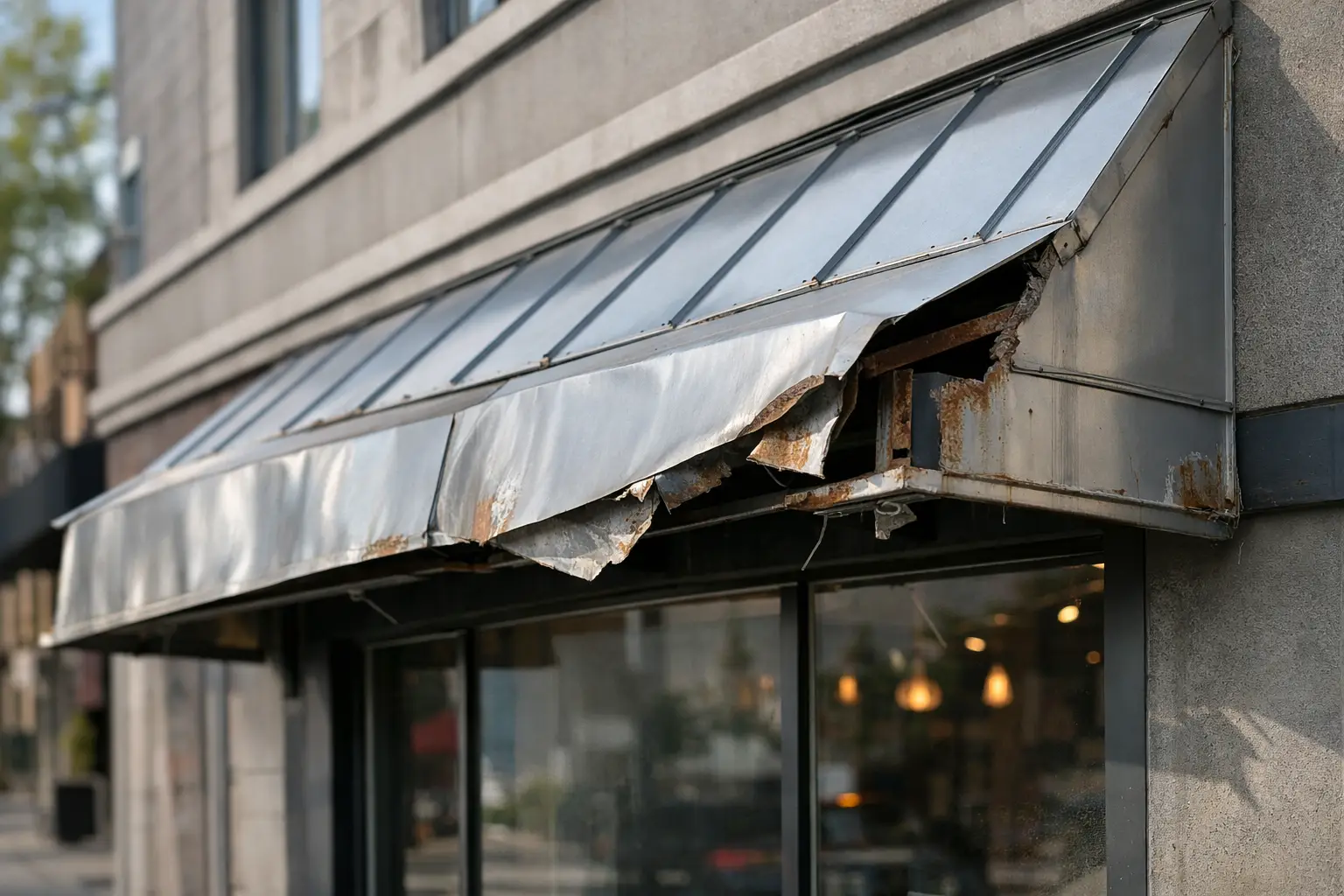
A shopfront awning can look sound from the footpath right up until it is not. Rust may be hidden behind fascia, water may be tracking into connection points, or an old impact may have weakened the frame long before the visible damage appears. So, why do commercial awnings fail? Usually, it is not one dramatic event. It is a combination of water, age, poor detailing, neglected maintenance and repairs that did not address the real problem.
For owners, landlords and property managers, an awning failure is more than an untidy frontage. It can create a public safety risk, interrupt trade, damage signage and expose the person responsible for the premises to urgent costs. Finding the cause early gives you more control over the repair, replacement or removal process.
Why Do Commercial Awnings Fail?
Commercial awnings carry more load than many people realise. They support their own weight, withstand wind pressure and uplift, manage rainwater, and often carry signs, lighting, cladding or air-conditioning services. Their connections back to the building are just as critical as the visible steelwork out front.
Failure occurs when one or more parts of that system can no longer do their job safely. Corrosion can reduce steel thickness. Loose fixings can allow movement. Poor drainage can keep water sitting where it should not. Once movement and moisture are present together, deterioration can accelerate quickly.
Sydney conditions can be particularly hard on street-facing structures. Coastal air affects exposed metalwork, heavy rain finds weak flashing details, and busy retail strips leave awnings vulnerable to accidental knocks from delivery vehicles, plant and building works. Age matters, but a relatively new awning can also fail early if the original design, installation or maintenance was poor.
Water Gets In Where You Cannot See It
Water ingress is one of the most common reasons for commercial awning damage. The roof surface may appear intact while water is entering at wall flashings, seams, penetrations, gutters or around fixings. It then reaches steel members, timber backing, ceiling linings or the building façade.
A leaking awning is not always a simple roof-sheet issue. If water is running behind the flashing rather than over it, replacing a few sheets will not solve the cause. The same applies where blocked gutters or incorrect falls allow water to pond. Standing water puts extra load on the structure and keeps surrounding materials damp.
Watch for staining on the underside, drips near the wall, bubbling paint, swollen linings, loose fascia or rust marks around bolts. These are warning signs, not cosmetic defects to leave until the next tenancy change.
Rust Is Often Further Advanced Than It Looks
Surface rust can sometimes be treated and protected. Deep corrosion is different. When rust develops around welded joints, bracket connections, post bases or concealed channels, the steel may lose meaningful strength before it looks severely damaged from the street.
Painting over corrosion without preparing the steel and stopping water entry is only a short-term cover-up. The coating can trap moisture or conceal the condition until more extensive work is needed. A proper assessment checks the frame, connection points, roof support members and areas hidden by cladding or ceiling linings.
Poor Design and Installation Create Long-Term Problems
Not every awning problem is caused by neglect. Some begin at construction. An awning needs a structure suited to its span, projection, materials, signage loads and exposure to wind. It also needs suitable fixings into a sound part of the existing building.
Problems can arise when the wrong materials are used, the frame is under-designed, falls are inadequate, or flashing is treated as an afterthought. A structure may also have been altered over time, with heavier signs, new light fittings or services added without checking whether the original awning can carry the extra load.
Connection details deserve close attention. An awning can have solid-looking posts and beams but still be unsafe if its wall fixings are compromised or attached to unsuitable substrate. Cracked masonry, deteriorated timber framing and loose anchors all need to be assessed properly. This is where experienced installers and, where required, engineer certification make a practical difference.
Movement, Impact and Wind Load Take Their Toll
Commercial awnings are exposed structures. Wind does not only push down on an awning. It can also lift it, twist it and place stress on brackets and roof sheets. Repeated movement can loosen fasteners and open gaps around flashings. During severe weather, an already weakened awning may be pushed past its limit.
Vehicle impacts are another regular cause, particularly around loading zones, narrow laneways and sites with frequent deliveries. Even a low-speed strike can bend a post, distort the front beam or shift a connection. If the awning still appears level, it may be tempting to leave it alone. That is risky. The damage may have transferred load into parts of the structure not designed to take it.
Building movement can also affect older shopfronts. Settlement, façade cracking and changes made during renovations can alter how an awning is supported. A repair should consider the awning and the building connection together, rather than treating visible distortion as an isolated issue.
Deferred Maintenance Turns Small Repairs Into Major Work
Awnings are often ignored because they sit above eye level. The first call may come only when water reaches the shop ceiling, a fascia starts to sag or a tenant notices loose material above the entry. By then, a minor maintenance job may have become a structural repair or full replacement.
Routine checks are straightforward and worthwhile. Look after major storms, before lease handovers and whenever external works are happening nearby. Clear leaves and rubbish from gutters, check that downpipes are flowing, and pay attention to new stains, rattles, loose sheets and visible corrosion.
Do not assume repeated patching is economical. Re-sealing the same leak every year, repainting over spreading rust or replacing isolated sheets on a failing frame can cost more over time than a planned replacement. It depends on the condition of the main structure, the extent of hidden damage and whether the existing awning can be brought back to a safe standard.
When Repair Is Suitable and When Replacement Is Safer
Repair is often the right option where the damage is localised. A sound frame with failed flashing, damaged sheeting, blocked drainage or a limited rust area may be repaired effectively if the source of the problem is removed. The work should restore weather protection as well as appearance.
Replacement becomes the better call when corrosion is widespread, structural members have thinned or distorted, connections are unreliable, or the awning no longer suits the premises. A new awning can also be a sensible choice during a façade upgrade, new signage installation or major tenancy fit-out, provided the design and approvals are considered from the start.
If an awning is unsafe, controlled demolition may be required before replacement. This is not work to rush or improvise above a public footpath. The area needs to be managed, the structure dismantled in the right sequence and risks to pedestrians, staff, neighbours and the building itself controlled throughout the job.
What to Do if You See Warning Signs
If you see sagging, loose cladding, active leaks, severe rust, bent posts, cracking around brackets or material lifting in the wind, treat it as a safety matter. Keep people clear of the affected area where possible and arrange an inspection rather than asking staff to make a temporary fix from a ladder.
Take clear photos from a safe position and note when the issue started, whether it worsens in rain or wind, and whether any impact or recent building work occurred. That information helps a contractor identify likely causes and quote the correct scope of work.
For commercial properties, the best outcome is usually a clear condition assessment followed by a practical recommendation: repair what is genuinely repairable, replace what is beyond reliable service, and obtain engineering input where the structure or compliance requirements call for it. Advanced Awnings approaches shopfront work with that focus, from safe removal through to properly finished replacement.
A commercial awning should protect your entrance, support the presentation of the premises and stay safely out of the way of the public below. Acting on the first signs of deterioration gives you the best chance of keeping the job controlled, compliant and within budget.