When Awning Repairs Cannot Wait at Your Shop
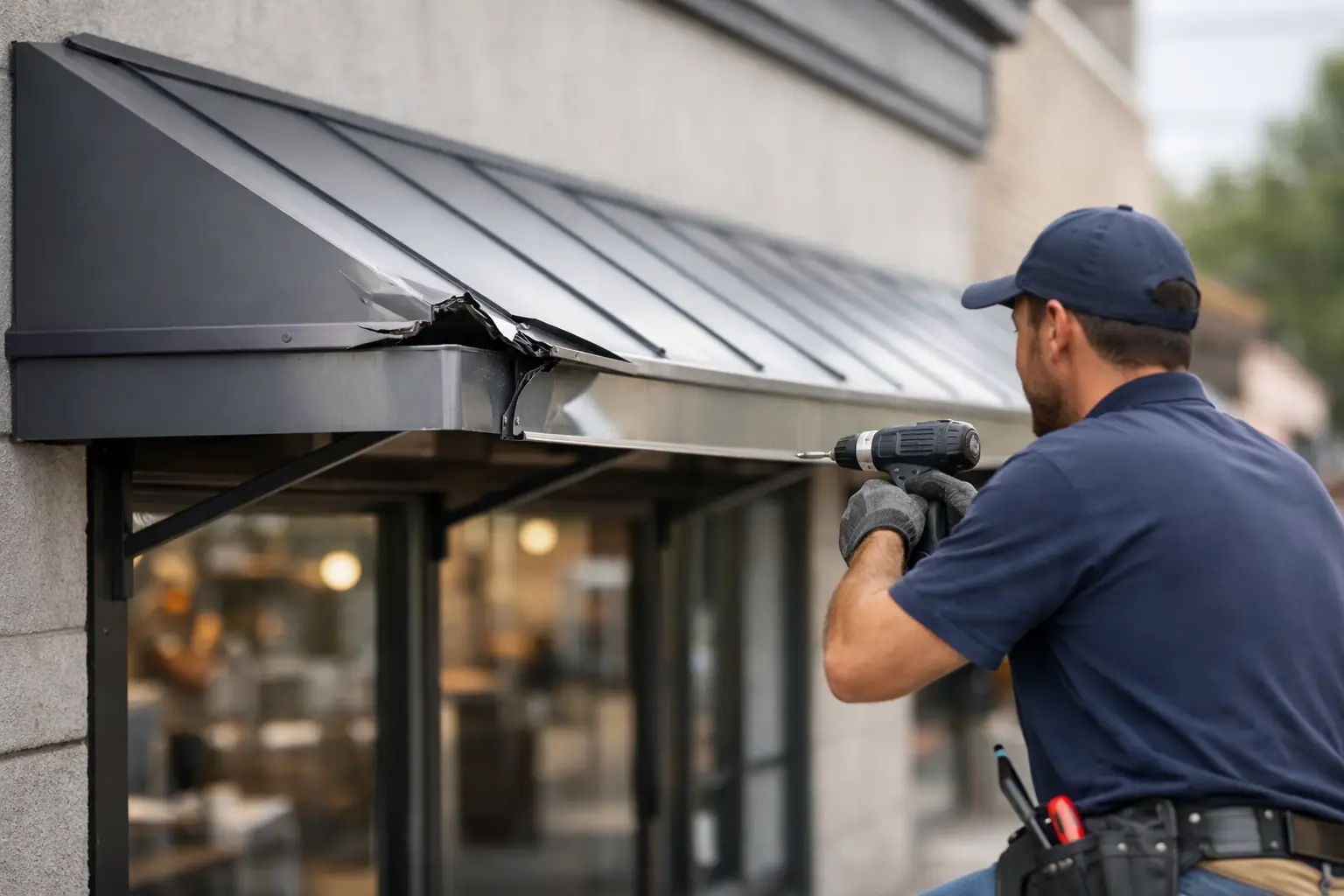
A shop front awning works hard every day. It takes sun, wind, rain, vehicle vibration and the occasional impact, all while sitting above customers and pedestrians on the footpath. When damage appears, awning repairs are not just a matter of tidying up the façade. They can be necessary to protect people, prevent further deterioration and keep a commercial premises looking properly maintained.
For landlords, shop owners and property managers, the right response is usually early assessment rather than waiting for a small issue to become a larger replacement job. The condition of the frame, fixings, cladding and surrounding building structure all matter. A visible problem may be localised and repairable, or it may point to deeper corrosion or movement that needs a more considered solution.
The signs your awning needs attention
Not every mark on an awning means the whole structure has failed. Surface dirt, minor paint wear and small dents can often be dealt with during planned maintenance. The concern starts when the awning no longer looks or behaves as a stable, weatherproof structure.
Arrange an inspection promptly if you notice any of the following:
- rust stains, bubbling paint or visible corrosion around steel members, brackets or fixings
- loose flashing, lifted sheeting, cracked panels or water entering near the shop front
- sagging sections, movement in wind, uneven lines or gaps where the awning meets the building
- damaged fascias, exposed sharp edges or loose material above a pedestrian area
Water staining on an internal ceiling or wall is another warning sign. Water may be entering through failed flashing, damaged roof sheeting or a poorly sealed connection. Leaving it alone can affect linings, electrical services and the wall structure behind the awning.
If any material appears loose above a public area, keep people clear of the affected section and seek professional advice without delay. Trying to secure high-level components from a ladder can create more risk than it solves, particularly on a busy street-front site.
Why shop front awning repairs need a proper assessment
Commercial awnings are often more than decorative canopies. They can be substantial structures fixed to a façade, supported by posts, integrated with signage, or built over existing services. Repair work needs to consider what is carrying the load, how water is being shed and whether the building connection remains sound.
A patch that looks acceptable from ground level may not address the actual cause. For example, replacing a rusted fascia sheet without checking the steel behind it can hide ongoing corrosion. Resealing a leaking joint without correcting the fall of the roof may simply move the water to another point. Good repair work starts with finding the source of the problem, not just covering the evidence.
This is especially relevant on older premises. Years of moisture, salt air in some Sydney locations, previous alterations and inconsistent maintenance can leave a mix of original and temporary work. A specialist should inspect the awning frame, cladding, fixings, flashing, drainage paths and the façade where the structure is attached.
Where structural movement, substantial corrosion or altered loading is involved, engineer input may be required. Engineer’s certification is not needed for every repair, but it is worth establishing early when the job involves structural components, a major change to the awning or concerns about its existing support. That avoids costly assumptions halfway through the work.
Common repair work on commercial awnings
The scope of repair depends on the type, age and condition of the awning. A straightforward job may involve replacing damaged metal sheeting, renewing flashings or repairing a localised fascia section. More involved work can require steel repairs, replacement brackets, new posts, re-sheeting, waterproofing work or removal of unsafe sections before rebuilding them.
Corrosion is one of the most common issues. It tends to start around penetrations, overlaps, unsealed edges and areas where water sits. Once rust has taken hold, simply painting over it is rarely a long-term answer. The affected material needs to be assessed, prepared correctly and repaired or replaced where its condition has been compromised.
Failed flashing is another regular problem. Flashing should direct water away from the building connection and prevent it getting behind the awning. If it has split, lifted or been installed with poor falls, water can enter areas that are difficult to see until internal damage appears.
Impact damage can also change the scope quickly. Delivery vehicles, elevated work platforms and storm debris can damage cladding, fascias and supports. Even where the damage appears limited, check whether the frame or building fixings have been pushed out of alignment. A repair should restore the awning’s function as well as its appearance.
Repair, partial replacement or a new awning?
The cheapest immediate option is not always the most economical over the life of the awning. If damage is contained, the remaining structure is sound and compatible materials are available, repairs can be a sensible way to extend service life. This is often the case with isolated leaks, damaged sheets, local rust treatment or a small section of fascia.
Partial replacement may make more sense where one end of the awning has deteriorated, a section has been damaged by impact, or the roof and fascia need renewal while the main frame remains sound. It can improve weather protection and presentation without the cost of removing the whole structure.
Full replacement is generally worth considering when corrosion is widespread, the frame has reached the end of its useful life, drainage problems are built into the design, or repeated repairs are becoming routine. It may also be the better path when a business is rebranding, renovating the tenancy or changing signage requirements. A new awning gives the opportunity to address structural details, falls, materials and finishes properly rather than continuing to patch an outdated structure.
The decision should be based on an honest site assessment. Ask for the condition of the existing structure to be explained clearly, along with what the proposed work does and does not solve. A clear quote should identify repair areas, replacement materials, access requirements and any certification or approval considerations relevant to the project.
Planning the work around an active business
Awning work is often completed above a live shop, café or retail tenancy. That makes planning as important as the physical repair. Pedestrian management, site access, delivery schedules, neighbouring tenants and weather all need to be considered before tools and materials arrive.
A capable contractor will work through how the area will be made safe, whether footpath access or traffic management is needed, and how dust, noise and falling-object risks will be controlled. If demolition is required, the removal sequence matters. Unstable materials must be taken down methodically, not pulled apart to save time.
There can be trade-offs. Completing work outside trading hours may reduce customer disruption but can add access or labour costs. Keeping the business open may be practical for a small repair, while a larger demolition or structural job may need a temporary exclusion zone. The right approach depends on the awning, the street conditions and how the premises operates.
Communication also matters. Property managers need certainty around timing and site controls. Tenants need to know when access may be affected. Nearby businesses appreciate advance notice where work will affect the shared frontage. Clear planning protects relationships as well as the job programme.
Choosing a contractor for awning repairs
Commercial awnings sit in a high-visibility, high-risk part of a building. The contractor should have direct experience with shop front structures, not just general roofing or handyman repairs. Ask whether they can assess the frame and façade connection, manage safe removal where needed, and organise engineer involvement when the work calls for it.
Insurance coverage, clear scope documentation and a practical site plan are equally important. A professional contractor should be willing to explain the proposed repair in plain language, including any limitations caused by hidden conditions or ageing materials. No one can see inside every wall or behind every fascia before opening the work up, but surprises should be managed openly rather than ignored.
Advanced Awnings works with commercial clients who need that direct approach, from local repairs through to demolition and replacement of shop front awnings. The focus should always be on safe work, sound construction and a finish that reflects well on the premises.
Do not let a small defect set the project agenda
An awning rarely fails all at once without prior warning. Rust marks, leaks, loose edges and movement are chances to act before the repair becomes urgent, disruptive and more expensive. Document what you can see, keep the public away from anything that looks unsafe, and arrange a site assessment while there is still time to choose the right solution rather than react to a failure.